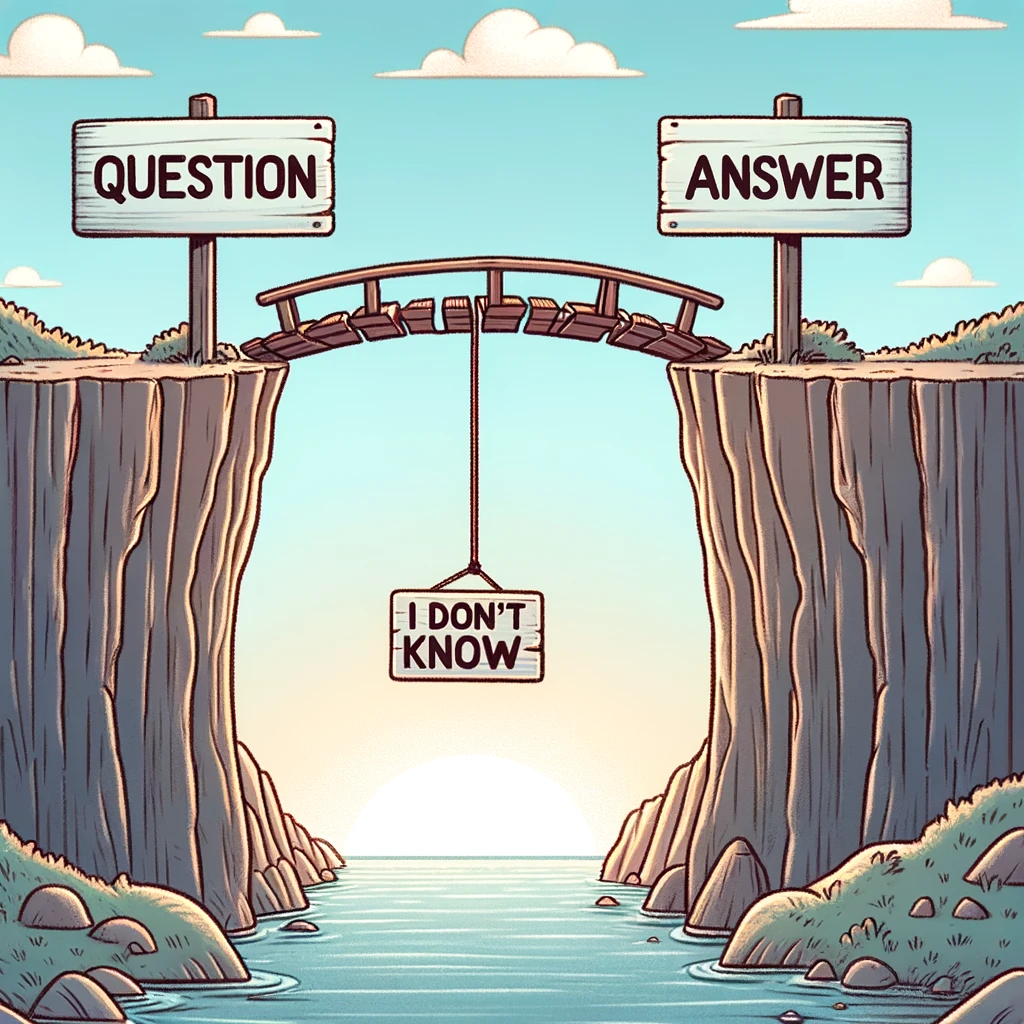
Admitting ignorance is not a sign of weakness; it’s a leadership strategy that encourages curiosity and continuous learning.
There is an unspoken expectation in many organizational cultures that leaders are supposed to have answers. Asking “what do you think?” or “I’m not sure, let’s find out” can feel like an admission of incompetence in environments where authority is confused with omniscience.
This confusion is expensive.
When leaders perform certainty they don’t have, several things go wrong:
- Teams stop bringing real problems because they don’t want to hear a confident but wrong answer.
- Decisions get made on incomplete information because no one wanted to appear uninformed.
- Learning stops at the top, and the organization loses its most powerful signal about what it doesn’t understand.
“I don’t know” is a high-leverage phrase when it’s followed by genuine curiosity: “I don’t know — what would we need to find out to answer this well?”
It models the intellectual humility that organizations need to navigate complexity. It creates permission for others to also not know, which is when real thinking starts.
The leaders who are most trusted over time are rarely the ones who had all the answers. They’re the ones who asked the best questions and created the conditions where truth could emerge.